EACC leads stakeholders in marking African Anti-Corruption Day, calls for collective action against corruption
EACC leads stakeholders in marking African Anti-Corruption Day, calls for collective action against corruption
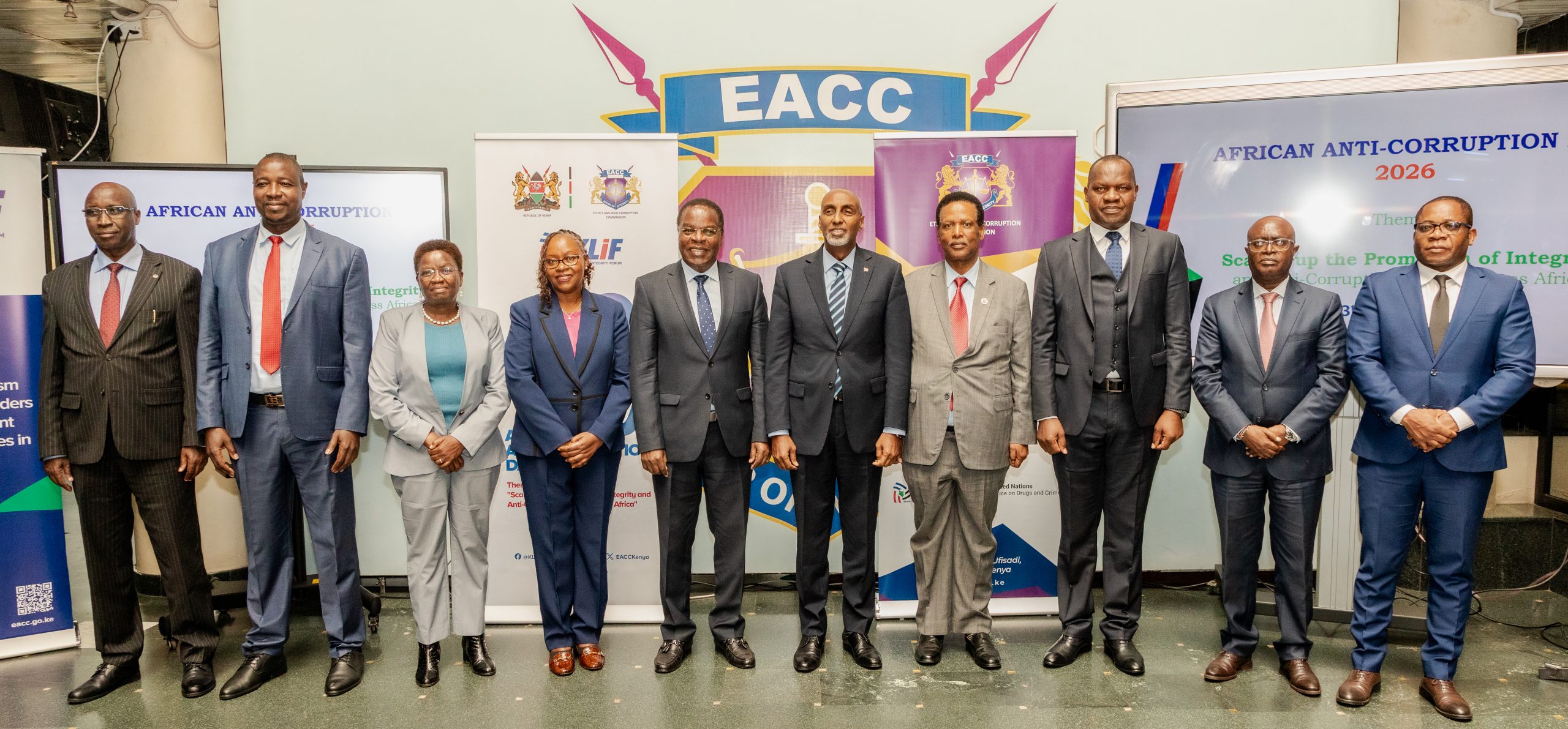
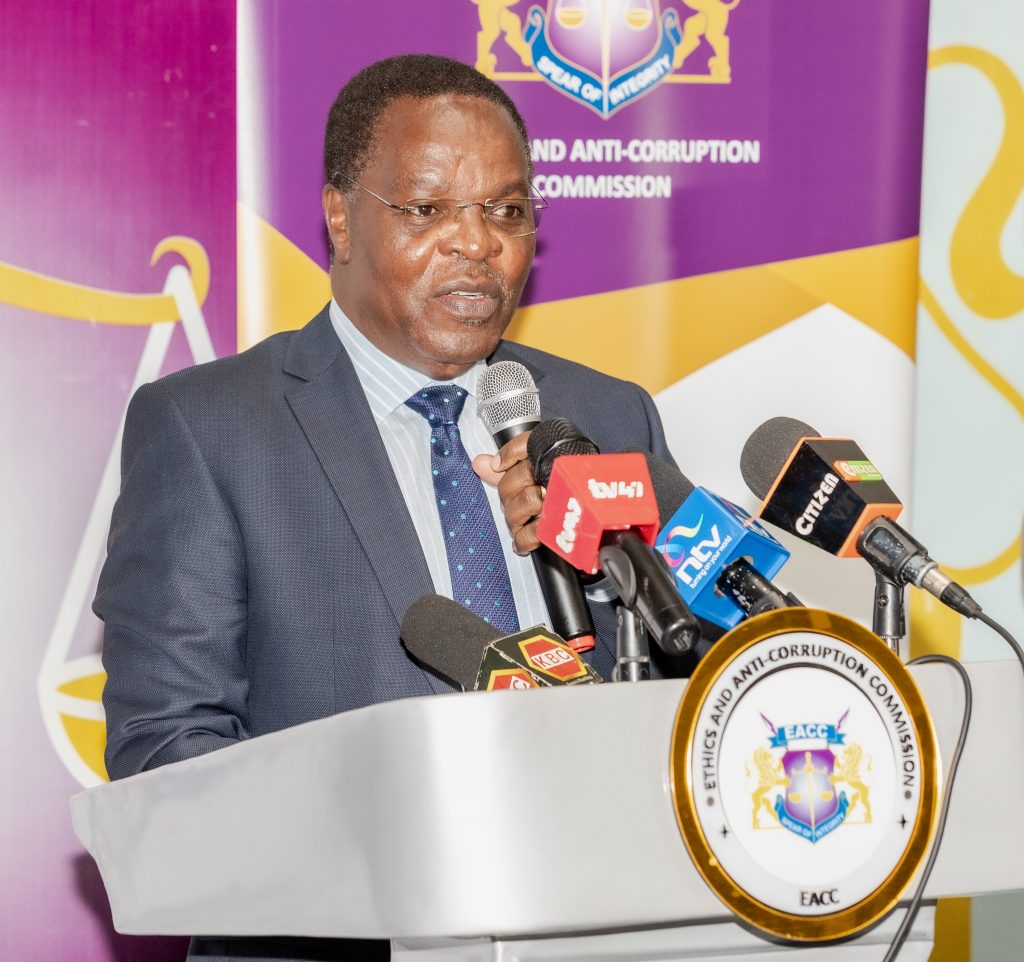
The Ethics and Anti-Corruption Commission (EACC), on Monday led the Kenya Leadership and Integrity Forum (KLIF) stakeholders in commemorating the 10th African Anti-Corruption Day at the Integrity Centre in Nairobi, with renewed calls for stronger partnerships and collective action to combat corruption.
This year’s commemoration was held under the theme, “Scaling Up the Promotion of Integrity and Anti-Corruption Actions Across Africa,” which challenges African Union Member States to move beyond awareness by strengthening integrity systems and accelerating anti-corruption efforts across the continent.
The event brought together leaders from government, constitutional commissions, professional bodies, county governments, development partners, civil society, and the private sector. Among those in attendance were the Deputy Inspector General of the Administration Police Service (APS), Gilbert Masengeli, representatives of the United Nations Office on Drugs and Crime (UNODC), the Media Council of Kenya, heads of institutions, and members of various sectors represented under the Kenya Leadership and Integrity Forum.
Speaking during the event, Law Society of Kenya (LSK) President, Senior Counsel Charles Kanjama, reaffirmed the Society’s commitment to advancing accountability and strengthening constitutional governance.
He declared that the LSK would undertake a constitutional audit in collaboration with constitutional commissions to enhance their capacity to discharge their mandates effectively. He further reiterated the LSK’s commitment to working with all stakeholders in the fight against corruption.
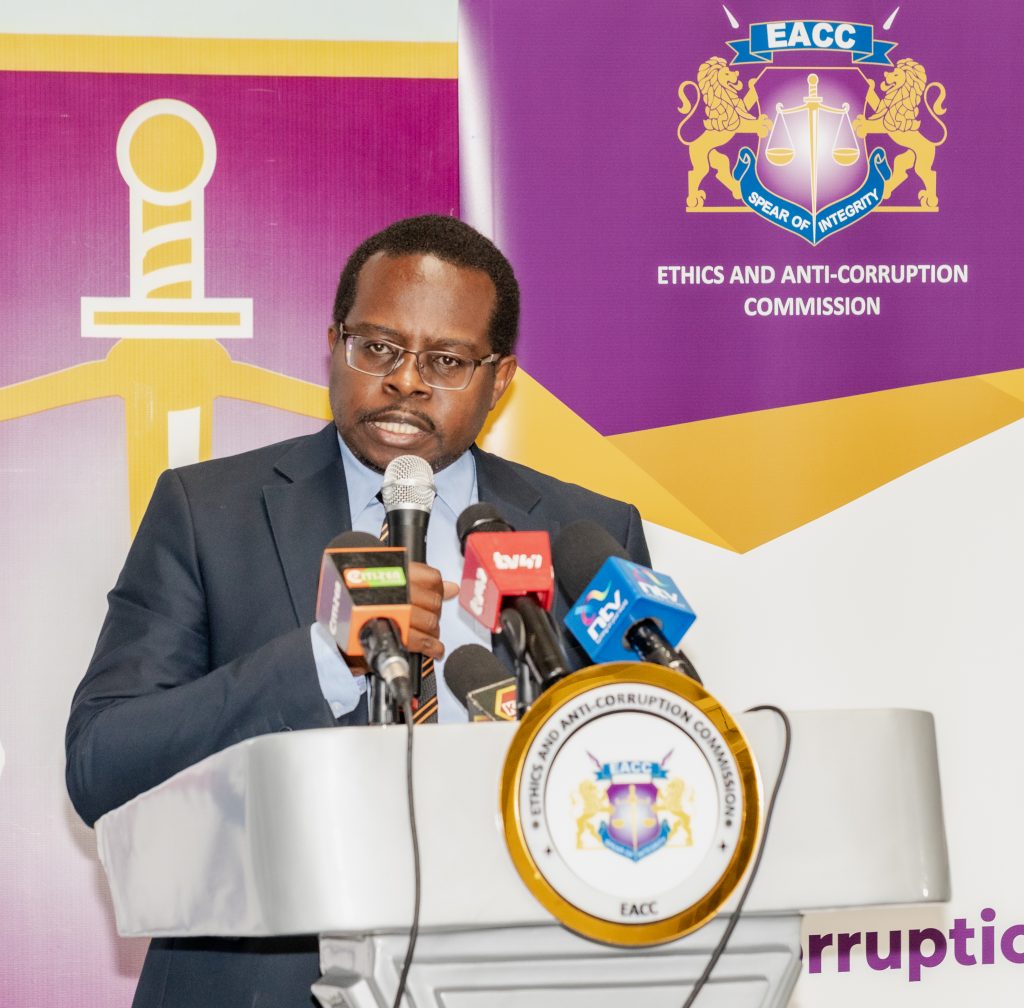
Representing regulatory agencies, the National Construction Authority Executive Director, Engineer Maurice Aketch, challenged regulators to lead by example by upholding the highest standards of integrity.
He observed that regulatory institutions have a duty to promote ethical conduct, provide fair and impartial services, and build public confidence through transparency and accountability.
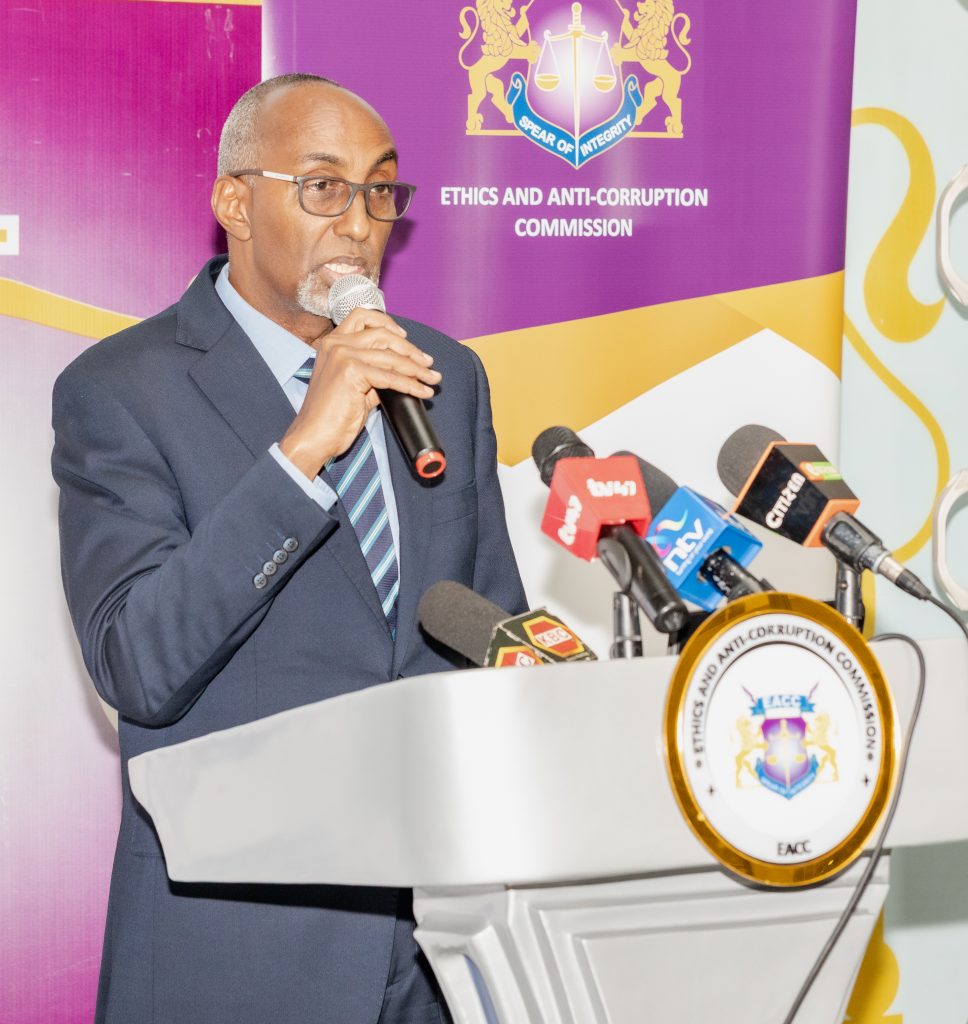
EACC Chief Executive Officer Mr. Abdi Mohamud described this year’s theme as both timely and relevant, emphasizing that the fight against corruption cannot be left to anti-corruption agencies alone.
He noted that meaningful progress requires the collective efforts of government, the private sector, civil society, professional bodies, the media, development partners and individual citizens.
Mr. Mohamud who is also the Chairperson of the Anti-Corruption Committee of the National Council on the Administration of Justice (NCAJ), reaffirmed his commitment to strengthening collaboration across the justice sector. He observed that the NCAJ provides an important platform for knowledge sharing, addressing operational challenges, and improving the effectiveness of Kenya’s criminal justice system.
Mohamud further observed that corruption is not merely a legal issue but a significant impediment to national development, denying young people opportunities and limiting families’ ability to achieve dignified livelihoods.
“Every act of integrity, however small, contributes to building a stronger nation. When citizens refuse to pay bribes, report corrupt practices, strengthen accountability within institutions, and businesses choose ethical conduct, each action contributes to a better Kenya,” he said.
EACC Chairperson Dr. David Oginde said the Commission is shifting from a compliance-based strategy to a governance-focused approach that addresses the systemic weaknesses and conditions that allow corruption to thrive.
He noted that the Commission is expanding partnerships across public institutions, the private sector and other stakeholders to tackle the systems and structures that perpetuate corruption.
Dr. Oginde emphasized that integrity is nurtured through everyday choices and that institutions must deliberately cultivate ethical leadership at every level.
“If we compromise on small matters today, we cannot expect to overcome grand corruption tomorrow,” he said.
Using a football analogy, the Chairperson observed that Kenya can only “win the World Cup of integrity” if every citizen plays by the rules, institutions remain impartial, justice is administered fairly, and those who violate the law are held accountable.
He urged Kenyans to make integrity a way of life by strengthening accountability, safeguarding public resources, and ensuring that ethical leadership remains the cornerstone of public service.
The annual African Anti-Corruption Day is observed on 11 July to commemorate the adoption of the African Union Convention on Preventing and Combating Corruption (AUCPCC). The day serves as a platform for African Union Member States to renew their commitment to preventing corruption, promoting integrity, and advancing good governance as key drivers of sustainable development across the continent.