EACC CEO urges adoption of AI and digital tools in anti-corruption efforts
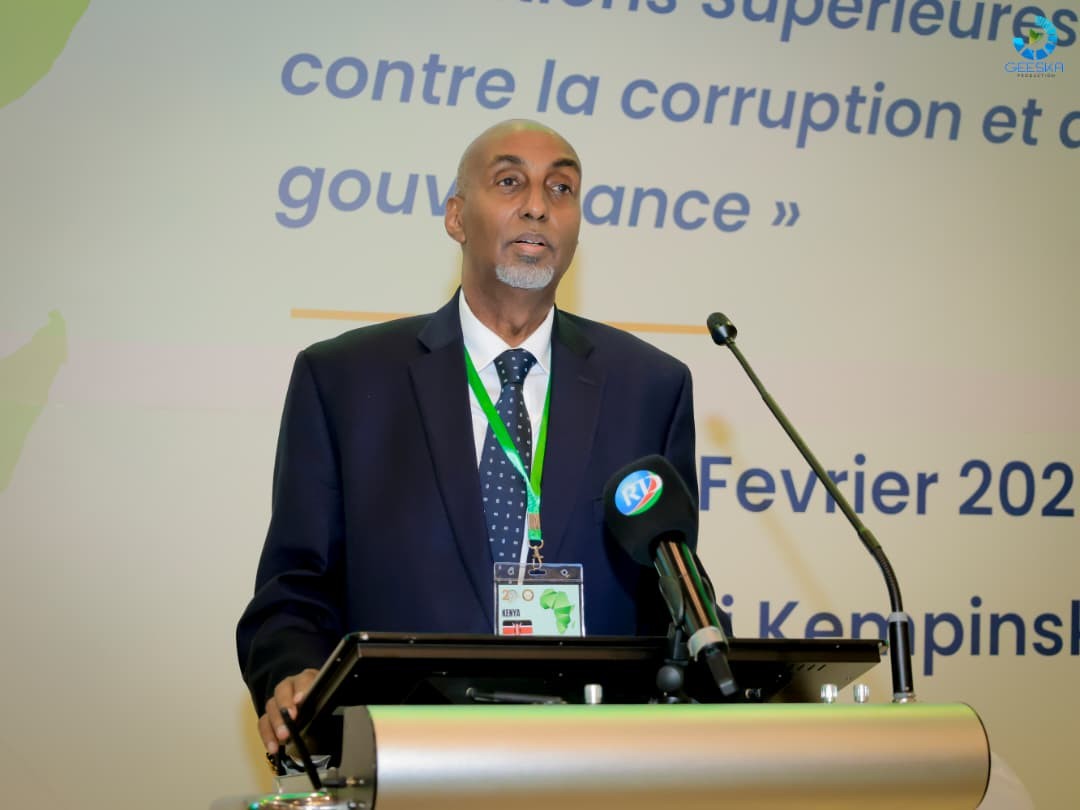
06:02:2026: The Ethics and Anti-Corruption Commission (EACC) Chief Executive Officer, Mr. Abdi Mohamud, has called on anti-corruption and oversight institutions across Africa to strengthen their use of digital technologies, including artificial intelligence (AI), blockchain, and data mining tools, to effectively combat corruption and financial crimes.
Speaking during the 13th International Symposium of the Forum of State Inspections of Africa and Assimilated Institutions (FIGE) held in Djibouti from February 3 to 5, 2026, Mr. Mohamud outlined Kenya’s experience and the EACC’s progress in leveraging digital technologies to enhance investigations, resource management, and institutional efficiency.
The CEO highlighted Kenya’s ambitious Digital Super Highway initiative, noting that increased connectivity and the expansion of e-government services were critical enablers of transparency and accountability. He further stated that Kenya is among a few African countries that have enacted laws regulating virtual assets, positioning the country to adopt virtual currencies while mitigating risks of money laundering and other financial crimes.
Mr. Mohamud emphasized that these developments require enforcement agencies to build advanced technical capacity. “The use of artificial intelligence, blockchain, and data mining tools is essential to stay ahead in the investigation of crimes involving virtual currencies and complex financial transactions,” he said.
He noted that the EACC has already made significant progress in digitisation, with 58 per cent of its processes automated, and remains on course towards full digitisation of its operations. The Commission, he added, has developed robust ICT infrastructure and a strategic plan anchoring digital transformation.
The Commission, the CEO said, uses internally developed digital systems to strengthen controls in resource management, as well as digital tools for the extraction, analysis, and management of evidence from electronic devices. He observed that wider application of AI would further enhance the analysis of large data sets and the detection of suspicious transactions.
Mr. Mohamud also informed delegates that Kenya, through the EACC, will host the Centre for Anti-Corruption Studies and Research in Africa (CEREAC), which is scheduled for launch in June 2026 during the Annual General Meeting of the Association of Anti-Corruption Agencies of Africa (AAACA). He urged African anti-corruption agencies to utilise the Centre to develop innovative, locally driven solutions to corruption and fraud.
The symposium, themed “New Digital Technologies Serving Audits and Control Institutions and Good Governance: What Contribution and What Limits,” was officially opened by Djibouti President H.E. Ismael Omar Guelleh. Senegal President H.E. Bassirou Diomaye Faye and Côte d’Ivoire Vice President Tiemoko Koné addressed the conference via video link, underscoring the importance of digital technologies and inter-agency cooperation in addressing transnational corruption.
The conference brought together heads of State Inspectorates and Anti-Corruption Agencies from 24 African countries, including Kenya, Uganda, Senegal, Angola, Côte d’Ivoire, Mauritania and the Democratic Republic of Congo. Representatives from international partners such as the World Bank Group, the European Union Anti-Fraud Office (OLAF), UNODC, and anti-corruption agencies from Hong Kong, Greece, Turkey, and the United States also attended, alongside academics and artificial intelligence experts.